That Twinge You Keep Ignoring? It's Trying to Tell You Something
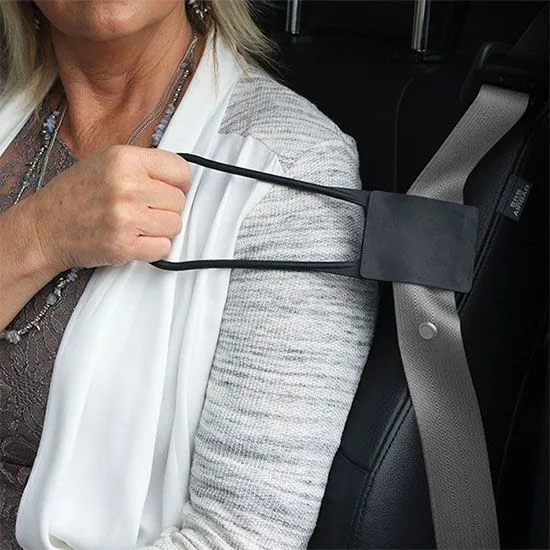
Photo: woman reaching seatbelt shoulder pain in car, via www.rebenmobility.com.au
Let me be blunt about something, because I think you'd rather hear it now than later: most of the lengthy recoveries I see in clinic didn't start as big injuries. They started as small twinges that got ignored for six months.
I understand why. Life is busy. Nobody has time to chase down a shoulder that's a bit nippy on a Tuesday. So we adapt instead — we reach for the seatbelt with the other arm, we get out of the car differently, we stop lifting that particular shopping bag. The body is wonderfully good at working around problems, and that's precisely the trap.
The Seatbelt Shoulder
Here's one I hear almost weekly: reaching across for the seatbelt, or to the passenger seat, and the shoulder catches or pinches. It's been happening for months. It doesn't really hurt — it just doesn't feel right.
That catch is rarely nothing. It usually means something in the shoulder joint or the muscles around it isn't gliding the way it should. Left alone, the body compensates by recruiting the neck and upper back to do the shoulder's job, and before long you've got a stiff neck, headaches, or a shoulder that's genuinely painful rather than just awkward.
Caught early, these things typically respond quickly. Caught late, we're unpicking months of compensation. Guess which one takes longer.
The School Run Hip
The other regular is the hip that aches after the school run. Carrying a child on one side, pushing a buggy, wrestling a scooter and a coat and a lunch bag — all while twisting to talk to a small person who is absolutely not looking where they're going.
Parents are astonishingly tough about this stuff. The ache gets filed under 'tiredness' or 'getting older', which is a shame, because it's neither. It's a load distribution problem, and load distribution problems are exactly the sort of thing that respond well to a bit of hands-on work and some simple adjustments to how you carry things.
Why We're So Bad at Listening
Part of it is British stoicism — we're raised to crack on. Part of it is fear: nobody wants to hear that something's wrong, so not asking feels safer. And part of it is simply that small aches are, by definition, easy to minimise. There's no dramatic moment, no fall, no pop. Just a slow drip of little signals that we keep hitting snooze on.
But here's the thing about the body's early warning system: it escalates. The twinge becomes a niggle, the niggle becomes pain, and the pain becomes an injury that stops you doing the things you actually care about — the Sunday football, the park with the grandchildren, the holiday where you finally get to walk properly again.
What's Actually Worth Getting Checked
You don't need to come running for every tiny twinge — bodies creak, that's normal. But do get assessed if:
- The same movement causes the same catch or pinch, repeatedly
- An ache keeps returning in the same spot after activity
- You've started avoiding movements because of it (that's your body already adapting)
- It's been going on more than a few weeks with no improvement
An assessment isn't a commitment to treatment. Often it's just finding out what's going on, which is a far better position than guessing.
My Honest Opinion
I'd rather see you for one appointment about a twinge than a course of treatment for a proper injury. Early problems are usually straightforward. Established ones rarely are.
So if you've been quietly managing that shoulder, or that hip, or that lower back, consider this your nudge. The body speaks quietly first. It only shouts when we don't listen — and by then, the conversation takes a lot longer to finish.