From the Ceremony to the Last Slow Dance: Why Weddings Wreck Us by Monday
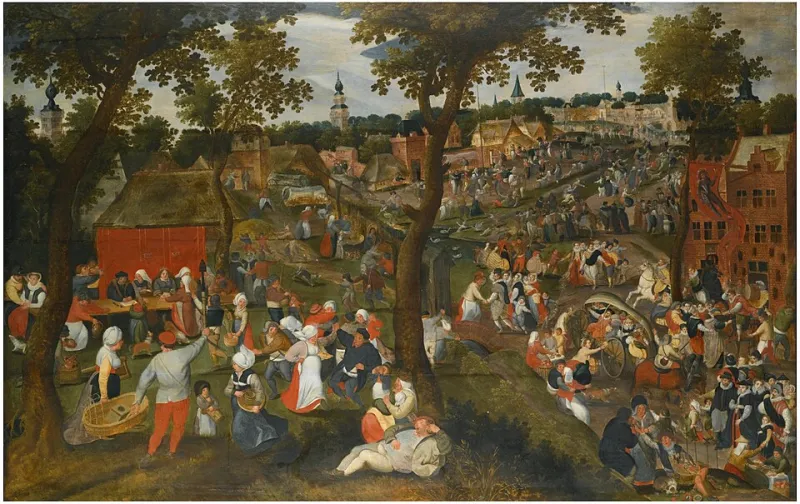
Photo: Marten van Cleve, Public domain, via Wikimedia Commons
There's a particular type of patient who limps into my clinic on a Monday between May and September. They're often slightly sheepish about it. "It was a lovely day," they say, "but I could barely get out of bed this morning."
A wedding. It's nearly always a wedding.
And honestly, I'm not surprised. From an osteopath's point of view, a wedding day is one of the most demanding things we ask our bodies to do — we just don't think of it that way because there's a hog roast and a disco at the end of it.
A Twelve-Hour Event in Unforgiving Shoes
Let's tally up what a typical wedding day actually involves. You're up early, travelling — often by car or coach — then standing around outside a church or registry office in your best footwear. Then the photos: a long stretch of standing, shifting your weight, holding a pose, holding a small relative. Then the meal, seated on what I can only describe as the banquet chair, a piece of furniture apparently designed by someone who has never met a lumbar spine.
Then the speeches, sitting still for an hour. Then the evening do, where the dance floor exerts a mysterious gravitational pull and suddenly you're four songs deep into a Shape of You medley.
That's twelve or more hours of sustained, low-grade loading on your back, hips and knees. It's not one dramatic injury — it's the accumulation. The same pattern I see with long car journeys or festival days: nothing hurts at the time, and then everything hurts afterwards.
Why the Ache Waits Until Monday
Muscles are quite forgiving while they're warm and you're distracted. Standing in heels on grass, subtly bracing to stay upright, keeps your calves, glutes and spinal muscles working quietly for hours. Add a couple of glasses of Prosecco — which dulls exactly the feedback signals that would normally tell you to sit down and stretch — and you can happily overload tissues that would otherwise have complained much sooner.
The stiffness you feel the next morning is the delayed bill. Inflammation settles overnight, muscles tighten as you lie still, and the first few steps out of bed feel like you've slept in a hedge.
Pace Yourself Through the Day
You don't have to spend the wedding in a deckchair. But a bit of strategy goes a long way:
Choose your shoes for the day, not just the photos. If you're in heels, take a pair of flats for the evening do. That one swap alone takes hours of strain off your calves and lower back.
Sit down strategically. Don't save sitting for the speeches — take a proper five-minute sit before the meal and again during the gap between the meal and the evening do. Little resets matter more than one long rest at the end.
Change position during the photos. Shift your weight, unlock your knees, roll your shoulders between group shots. Standing rigidly for forty minutes is harder on your back than most of the dancing.
Warm up before you go wild. If you know you'll be dancing, do a few gentle hip circles and shoulder rolls before you hit the floor. It sounds daft. It works.
Alternate your dance moves. An entire evening of one repeated motion — usually whatever the current trend dance involves — is how you strain one specific spot. Mix in some swaying. Your spine likes variety.
When It's Worth Getting Checked
Most wedding aches settle within a few days with gentle movement, warmth and a bit of stretching. But if the pain is sharp, travelling down a leg, or simply refuses to shift after a week or so, that's your cue to come and have a look. Often there's an underlying stiffness that the wedding merely exposed — and it's much easier to sort out now than before the next invitation lands on the doormat.
Enjoy the season. Dance the last dance. Just maybe bring the flats.