Sunday Laundry, Monday Stiff Neck: The Real Cost of Ironing Day
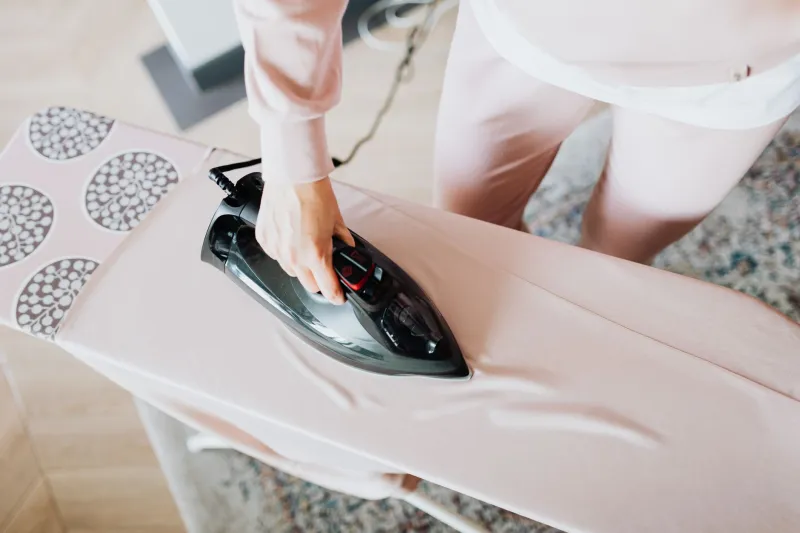
There's a particular kind of patient I see on a Tuesday morning. They arrive saying their neck 'went' at the weekend, or their shoulder's been grumbling since Sunday. We run through the usual suspects — any falls, any new gym classes, any dramatic DIY? Nothing. Then I ask what they were doing on Sunday afternoon.
'Oh, just the ironing. Three loads of it.'
There it is.
The Chore That Pretends to Be Restful
Ironing doesn't feel like exercise. You're standing still, in your own kitchen, listening to Radio 4. Compare that to hauling paving slabs and it seems harmless. But here's the thing: your body doesn't distinguish between a gym session and a chore. It only understands how long you hold a position and how much tension you're carrying while you hold it.
And ironing asks you to hold a genuinely awkward position for a surprisingly long time. Most people stand with the board set too low, so they're slightly stooped. The working arm reaches forward and across, over and over. The shoulder on that side tends to ride up towards the ear — partly habit, partly because that's what we do when we concentrate. Meanwhile the neck cranes down and slightly rotated towards the garment.
Now do that for ninety minutes. Then do it every week for twenty years. That's when the pattern stops being a Sunday thing and becomes the shape of you.
What's Actually Going On Up There
The muscles along the top of your shoulders — the upper trapezius, mainly — are postural workhorses. They're designed for short bursts of effort, not sustained gripping. When they stay switched on for long stretches, they fatigue, they accumulate tension, and they get very good at complaining. That deep ache across the top of the shoulders, the one that feels like a coat hanger has shrunk in the wash? Classic overworked upper traps.
The neck pays its share too. Holding your head craned forward and turned for an hour means the small muscles at the base of the skull and the sides of the neck are working overtime. People often describe a band of tightness at the base of the head, or a nagging ache between the shoulder blades. Some notice a headache creeping in by the evening.
The reaching arm gets its own problems. Repeatedly lifting the elbow out to the side and forward loads the rotator cuff — the group of small, fussy tendons that keep the shoulder ball centred in its socket. Irritate them often enough and you start getting a pinch or a catch when you reach up to the top shelf. I've lost count of the patients who blame 'old age' for a shoulder that's really just been ironing duvet covers since 1998.
None of this is dramatic. That's the point. It's slow accumulation — the boring chore writing small debits against your shoulders every single week until the account's overdrawn.
Sort the Setup First
If you only change one thing, change the height of the board. The general rule: set it at about waist height, maybe a touch higher if you're tall. Your forearm should rest roughly parallel to the board as you iron, without your shoulder lifting. If you're reaching down and hunching over, the board's too low — and most of them are, for most people.
A few other quick wins:
- Face the board square on. Lots of us stand at an angle, twisting the neck and trunk towards the ironing hand. Line yourself up properly and half that twist disappears.
- Alternate which end of the board you work from. It feels odd for about two minutes, then it feels like free variety for your body.
- Keep the iron close. Constantly stretching to slide it back onto the heel rest adds dozens of small reaches per shirt. Rest it mid-board if the design allows.
- Ditch the duvet cover. Honestly. Iron it damp on the bed if you must, or embrace the slightly lived-in look. Nobody has ever inspected a duvet cover at a dinner party.
Break the Spell
The other half of the solution is movement breaks. Tension builds because the position never changes, so change it — deliberately, every fifteen minutes or so. Not a stretch session, just a reset:
- Stand tall and let your arms hang heavy at your sides for ten seconds. Feel the shoulders drop? That's the tension leaving.
- Roll your shoulders backwards a few times, slow and exaggerated.
- Turn your head gently to look over each shoulder, then bring your chin towards your chest.
- Walk to the kettle. Make tea. This is a legitimate therapeutic intervention and I will defend it in court.
Put a timer on if you need to. It sounds fussy, but the difference between ninety unbroken minutes and six short blocks with resets in between is genuinely noticeable by Monday morning.
When It's Worth Getting Looked At
Most ironing-related aches settle once you've adjusted the setup and given things a few days. But if you've got a shoulder that catches or pinches when you lift, a neck that's stiff in one direction and has been for weeks, or pain that's creeping down the arm — that's your body asking for a proper assessment rather than another Ibuprofen.
That's the sort of thing I see every week in clinic: the shoulder that's been quietly complaining since the autumn, the neck that's lost its turn to the left. Osteopathic treatment works to release the built-up tension, restore movement to the joints that have stiffened, and — just as importantly — work out which habits built the problem in the first place.
Because the washing basket will always refill. Your shoulders, though, only get the one set. Look after them — and if you need a hand, you know where I am.