That Headache Behind Your Eyes? It Might Be Your Neck Talking

Photo: woman rubbing neck headache at home window light, via c8.alamy.com
There's a particular kind of headache that's easy to misread. It settles behind one eye, or spreads across the forehead like a tight band, and it feels for all the world like a proper head problem. So you reach for the paracetamol, dim the lights and carry on. Then it comes back next week. And the week after.
In my clinic, one of the most satisfying things I do is ask a patient with a headache like this to let me look at their neck. Because quite often, the head isn't the problem at all — it's just where the pain has decided to announce itself.
What Is a Cervicogenic Headache?
'Cervicogenic' simply means 'coming from the cervical spine' — the neck. The top three vertebrae of your neck share a clever bit of wiring with the nerves that carry sensation from your face and head. When the joints, muscles or soft tissues up there get irritated or overloaded, your brain can struggle to tell exactly where the message originated. So it reads it as head pain, even though the true source is sitting down at the base of your skull.
It's remarkably common, particularly in people who spend long hours at a desk, drive a lot, or have a long-standing habit of holding tension in their shoulders. And because it feels like a headache, most people just medicate through it rather than ever getting the neck properly assessed.
The Clues That Point to Your Neck
So how do you know your headache might have a musculoskeletal culprit? These are the patterns I listen out for:
- It's usually one-sided, and the side doesn't switch. Migraines can hop from side to side. Cervicogenic headaches tend to stay loyal to one side, often the same side as a stiff or grumbling neck.
- It starts in the neck or base of the skull, then travels forward. Many people describe a creeping sensation — a niggle behind the ear or at the hairline that gradually works its way up and over to the eye or temple.
- Movement matters. Turning your head, looking up at a high shelf, or lying on that side can bring the headache on or make it worse. That's a big clue the joints are involved.
- Your neck is stiff or achy anyway. Reduced range of motion, that gritty feeling when you turn to reverse the car — it all ties together.
- It eases with rest or warmth rather than just painkillers.
None of these on their own is a diagnosis, of course. But together they build a picture that's quite different from a migraine, tension headache or something more sinister.
How I Trace the Pain Back to Its Source
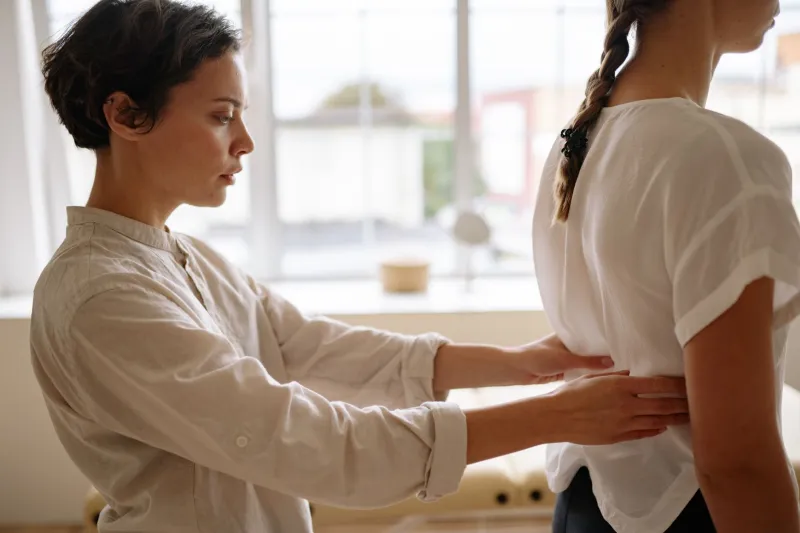
When someone comes to see me about headaches, the first appointment is really a bit of detective work. I'll take a proper history — when it started, what makes it better or worse, what your working day and sleep look like. Then comes the hands-on part: gently feeling the joints and muscles of the neck and upper back, testing how far and how comfortably your head turns, and checking whether pressing on a particular spot at the base of the skull reproduces that familiar headache feeling.
That last one can be a bit of a lightbulb moment. When I press on the exact place that lights up the pain behind your eye, we've usually found our suspect.
From there, treatment tends to involve gentle mobilisation of the stiff joints in the upper neck, soft tissue work through the shoulders and the muscles at the base of the skull, and practical advice — often about desk setup, screen height, or the way you sleep. Most people also leave with a couple of simple movements to keep things moving between appointments.
When the GP Should Be Your First Port of Call
I want to be clear about something: not every headache belongs in an osteopath's room. If your headaches are sudden and severe, getting worse week on week, accompanied by changes in vision, speech or balance, or you've noticed fever, a rash, or a headache after a knock to the head — please see your GP first. Headaches with any of those features need proper medical assessment, and a good osteopath will always tell you so.
Even in less urgent cases, if you're getting frequent headaches for the first time, a chat with your GP is sensible to rule things out before we start treating the neck. I'd rather send someone away than treat the wrong problem.
You Don't Have to Just Swallow Tablets and Get On With It
The patients who do best are the ones who've been quietly putting up with the same one-sided headache for months, sometimes years, and had no idea their neck was behind it. Once we address the joint stiffness and muscle tension at the source, the pattern often starts to break — fewer headaches, shorter ones, and eventually just the odd twinge on a bad week.
If any of this sounds familiar — the stubborn one-sided ache, the neck that's been stiff for as long as you can remember — it might be worth letting someone have a proper look. You can find out more about how I work, or book an initial appointment, at amandacook-osteopath.uk. Your head, and your medicine cabinet, might both thank you.