Ten Minutes at the Kitchen Table: Giving Your Child's School Bag a Proper Once-Over

Photo: Unknown authorUnknown author (Franz Konrad confessed to taking some of the photographs, the rest was probably taken by photographers from Propaganda Kompanie nr 689.[1][2]), Public domain, via Wikimedia Commons
Every September, without fail, a parent sits in my treatment room and mentions — almost in passing — that their child has been complaining of aching shoulders or a stiff neck since term started. Then I ask the question that usually gets a sheepish laugh: "Have you ever actually weighed their school bag?"
Most haven't. And it's not negligence — it's just that bags creep. A water bottle here, a PE kit that never comes home there, and by half term a Year 7 who weighs four stone is hauling a bag that's a third of their body weight. That's the equivalent of me walking around with a couple of paving slabs on my back all day.
So let's fix it. Here's the audit I suggest parents run at home — it takes about ten minutes and a set of bathroom scales.
Step One: Weigh the Bag, Then Weigh the Child
Pop the bag on the bathroom scales as it is — water bottle, pencil case, the works. Note the number. Then weigh your child and jot that down too.
The general guideline, widely used by physiotherapists and osteopaths alike, is that a school bag shouldn't exceed roughly 10–15% of a child's body weight. For a smaller child in particular, that limit arrives alarmingly fast. A child weighing 25kg (about four stone) shouldn't be carrying much more than 3–3.5kg — and a typical loaded secondary school bag often hits double that.
Step Two: Play Bag Detective
Now empty it out. Genuinely — tip it onto the kitchen table and go through it together. In my experience you'll find:
- A full pencil case that duplicates the one left at school
- Last term's maths textbook, long since finished
- A water bottle half full from Tuesday
- PE kit that's been there since the start of term (and smells like it)
Ask the school whether textbooks can stay on site, or whether a photocopy or digital version will do. Many secondary schools are happy to accommodate this if asked — most teachers would rather your child arrived without a shoulder complaint.
Step Three: Check the Fit, Not Just the Weight
A well-packed bag carried badly is nearly as problematic as an overloaded one. Look at three things:
The straps. Both straps should be used — every day, no exceptions. The one-shoulder sling is the single biggest culprit I see, piling the entire load through one side of a developing spine. Padded, adjustable straps are worth paying a little extra for.
The position. The bag should sit snugly against the back, with the base around waist height rather than sagging towards the knees. Tighten those straps properly.
The child. Watch them put it on and walk a few paces. If they lean forward, hunch their shoulders, or mark the moment by groaning theatrically, that's your answer.
When to Take It Further
Occasional aching after a long day, eased by rest, is usually nothing to worry about. But it's worth a professional opinion if you notice:
- Pain that lingers into evenings or weekends
- Your child regularly changing posture to favour one side
- Persistent headaches or neck stiffness, particularly after school
- Any complaint that seems to be getting worse as the term goes on
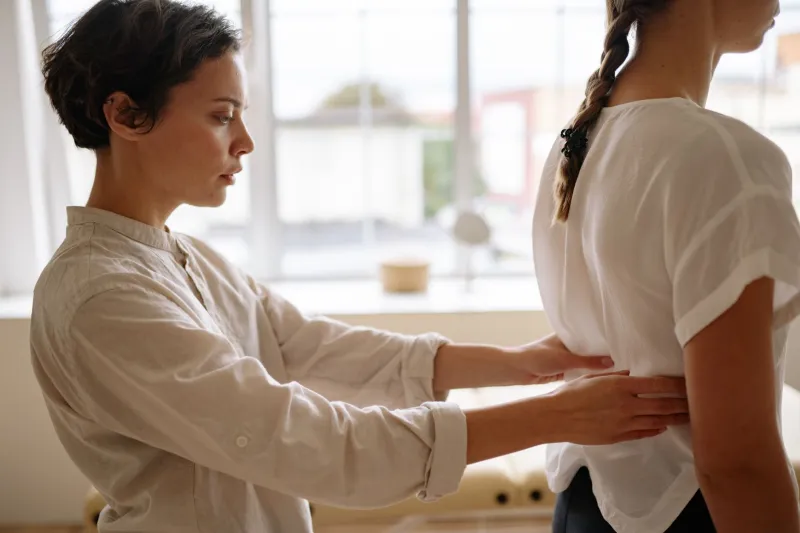
An osteopathic assessment can identify whether the load is genuinely straining developing muscles and joints, and — just as usefully — can spot the postural habits forming around it. Early intervention is straightforward; habits of a whole school career are harder to unwind.
A Small Habit Worth Building
Make the bag check part of the Sunday evening routine, alongside the reading diary and the hunt for the left PE trainer. It takes two minutes once you've done the full audit, and it keeps the creep in check.
Your child's spine has years of growing to do. A ten-minute check at the kitchen table is a small investment in making sure it gets there comfortably.