The Festival Rucksack, the Folding Chair and the Long Walk to the Car Park: An Osteopath's Survival Guide to British Summer Events
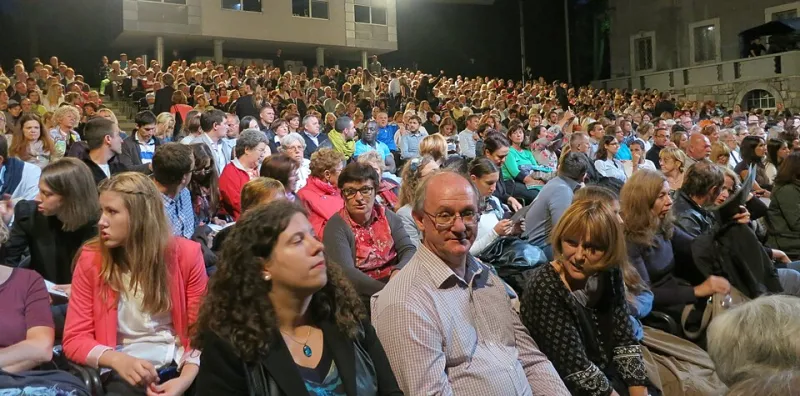
Photo: MollySVH, CC BY 2.0, via Wikimedia Commons
Every summer, without fail, someone hobbles into the clinic on a Monday and says the same thing: "I only went to a fete." Or a food festival. Or a day at the cricket. Or three nights camping at Glastonbury because their partner found tickets and their back had no vote in the matter.
British summer events are a peculiar physical challenge. We train for nothing, we prepare for nothing, and then we ask our bodies to stand for seven hours on rutted ground, sit on furniture designed by someone who clearly hates hips, and carry everything we own across a field the size of a small airport. No wonder my diary fills up in July.
Here's how to get through the season with your spine intact.
The Rucksack Problem: Pack Like You'll Be Walking Home
A day bag carried badly can do more damage than the event itself. The classic mistake is the tote bag — everything slung over one shoulder, pulling you sideways for hours. By the time the headline act comes on, one set of muscles has been working overtime while the other has effectively clocked off.
A rucksack with two padded straps, worn on both shoulders, wins every time. Keep it snug against your back rather than hanging off your backside, and pack it sensibly: heavy items close to your spine, water bottle central, and don't bring the kitchen sink. You are not Bear Grylls. A poncho, suncream, plasters and a refillable bottle will cover most British eventualities.
If you're camping, the same rules apply with interest. Load the tent across both shoulders or split kit with whoever you've travelled with. I've treated enough post-festival necks to know that a tent carried on one shoulder for two miles is a gift that keeps on giving — just not in a good way.
The Folding Chair Is Not Your Friend
Low picnic chairs look idyllic. They're also, biomechanically speaking, a trap. The seat height forces your hips lower than your knees, rounds your lower back into a C-shape, and leaves you craning forward to eat, chat or see the stage. Two hours in that position and your back will have opinions.
You don't have to give up the chair — just outsmart it. Sit on the front edge rather than sinking back, so your hips sit higher and your spine keeps some of its natural curve. Stand up and wander about every twenty minutes or so; festivals are one of the few places where pacing around aimlessly looks completely normal, so use it. And if there's a backrest, actually use the backrest rather than hovering off the edge of the seat for hours.
Standing? Soft ground is kinder than concrete, but even grass becomes unforgiving by hour five. Shift your weight between feet, roll your shoulders now and then, and if you can find a rail, hay bale or tree to lean against, lean. Nobody's grading your posture at a festival.
Getting Up Off a Camping Mat Without Sounding Like a Kettle
This is the one people ask me about, usually with a laugh that hides genuine dread. The overnight festival mat — thin, low, and apparently welded to the ground — turns the simple act of standing up into a full-body negotiation.
The trick is to stop using your lower back as the engine. Instead:
- Roll onto your side first. Don't try to sit straight up from flat; that's the move that makes people yelp.
- Push up onto hands and knees, or at least onto one forearm.
- Bring one foot forward into a half-kneel, so you're in a lunge position.
- Stand by pushing through the front leg, using your hands on your knee or the ground for help.
It looks a bit theatrical. Nobody in a festival campsite is judging — most of them are doing it worse. The same technique works for getting up off picnic blankets, low seating and, honestly, out of bed on a cold morning.
The Long Walk to the Car Park: The Final Boss
Event organisers have a sense of humour. After a full day on your feet, you get a twenty-minute trek to the car park, across fields, usually downhill on the way in and uphill on the way out.
Two things help. First, keep a little in the tank: don't blow all your energy by mid-afternoon, because the exit march is real. Second, pace yourself on the walk — long, easy strides rather than shuffling, and use the time to loosen up rather than slumping into your phone. Shoulders back, arms swinging, eyes up. It sounds like something a PE teacher would say, but a brisk ten-minute walk out of a festival is genuinely good for the joints you've just spent all day compressing.
Then, in the car: adjust the seat before you drive off, and if you've got a long journey home, stop once to stretch your legs. Your back will thank you for it around junction fourteen.
The Day After: Recovery Without the Guilt
Monday morning after a big event is rarely dignified. Expect some stiffness — that's normal, and it usually settles within a day or two. Keep moving gently rather than seizing up on the sofa; a short walk does more for a stiff back than a day of lying still. Hydrate properly (festivals and dehydration go hand in hand, and muscles notice), and a warm shower or a hot water bottle on achy areas can take the edge off.
If a particular joint is still grumbling after a week, or you've got pain that's sharp, spreading or stopping you sleep, that's the point where it's worth getting it looked at properly rather than waiting for it to sort itself.
Summer should be about the music, the strawberries, the questionable face paint — not about bracing every time you stand up. Pack sensibly, get up like you mean it, and save yourself the Monday appointment. Though if you do need one, you know where I am.