The 3am Toss and Turn: What Your Sleep Position Is Doing to Your Spine
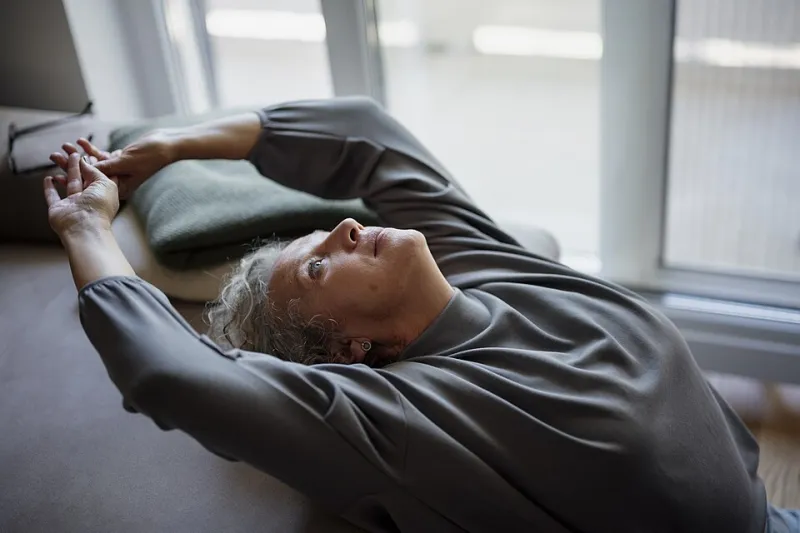
Photo: Shixart1985, CC BY 2.0, via Wikimedia Commons
There's a particular kind of frustration in waking up tired. You've done everything right — screens off, curtains drawn, a proper eight hours — and yet you shuffle to the kettle feeling like you've slept in a hedge.
In clinic, morning pain is one of the most common complaints I hear, and it often catches people off guard. "But I haven't done anything," they say. That's precisely the point. You've spent a third of your day in one position, and your spine has opinions about which one.
Why mornings hurt in the first place
Overnight, your body does its housekeeping. Discs in your spine rehydrate, tissues repair, and inflammation from the day settles. Fluid shifts overnight mean you're genuinely a little taller in the morning — and your discs are a little fuller, which is why the first movements of the day can feel stiff and creaky.
For most people this passes within twenty minutes or so. But if your neck or back is held in an awkward position for hours on end, that natural stiffness tips into proper aching, and it can set the tone for your whole day.
The side sleeper's guide
Side sleeping is the most popular position in the UK, and it's largely a good one — it keeps your spine in a fairly neutral line. The trouble comes from two common mistakes.
First, pillow height. Lie on your side and look in a mirror: your nose should line up with your breastbone. If your head tilts up, the pillow's too high; if it droops down, it's too flat. Side sleepers generally need a fuller pillow than back sleepers because of the gap between shoulder and ear.
Second, the top arm. Draping it over your side pulls your upper back into rotation all night. Hugging a cushion, or resting your hand on a pillow beside you, takes that strain off.
And one for the parents: a pillow between the knees is not a luxury. It stops the top leg dragging the pelvis into rotation and takes real pressure off the lower back.
Back sleepers: mostly good news
Lying on your back is the easiest position on the spine, provided your pillow isn't shoving your chin towards your chest. You want something slimmer than a side sleeper's — just enough to support the curve of your neck.
If your lower back complains on your back, try a folded towel under the knees. It's a small change that flattens the lumbar curve slightly and gives those muscles a proper rest.
Front sleepers, we need to talk
I'll be honest: if I could redesign one habit, it would be face-down sleeping. To breathe, you must rotate your neck to one side for hours. Then your lower back arches because of the tilt of your pelvis. It's a double whammy.
Going cold turkey rarely works — habits like this are stubborn. A gentler route is to start the night on your front and move onto your side whenever you wake, or to place a thin pillow under the pelvis to ease the lumbar arch. Most people migrate away from front sleeping naturally once they're waking more comfortably.
Mattresses: expensive myth vs useful truth
Do you need a "specialist" mattress costing four figures? Usually not. What research supports is a medium-firm feel, and what matters more is whether your current mattress sags.
A simple test: lie on your back and slide a hand under the small of your back. If it slides through easily with a gap, the surface is probably too firm for you; if it's a real struggle to get your hand under at all, you may be sinking too much. Rotate the mattress regularly, and if yours is pushing a decade old, it's worth replacing — you'll spend around a third of your life on it, after all.
When morning stiffness is worth checking
Most morning aching is positional and eases once you're up and moving. But some patterns deserve a proper look:
- Stiffness that lasts well over an hour, most mornings
- Pain that's steadily worsening over weeks rather than fluctuating
- Night pain that wakes you and doesn't shift with position changes
- Stiffness accompanied by swelling in other joints
Osteopathy can help untangle the postural strains that build up from years of awkward sleep, and — just as importantly — a hands-on assessment will tell you whether what you're feeling is simple stiffness or something that needs further investigation.
You spend roughly 2,500 hours a year in bed. It's worth making sure those hours are working for your spine, not against it. If your mornings have been greeting you with an ache that's outstayed its welcome, do get in touch — sometimes the smallest change makes the biggest difference.